Honoring the Tree’s Natural Geometry
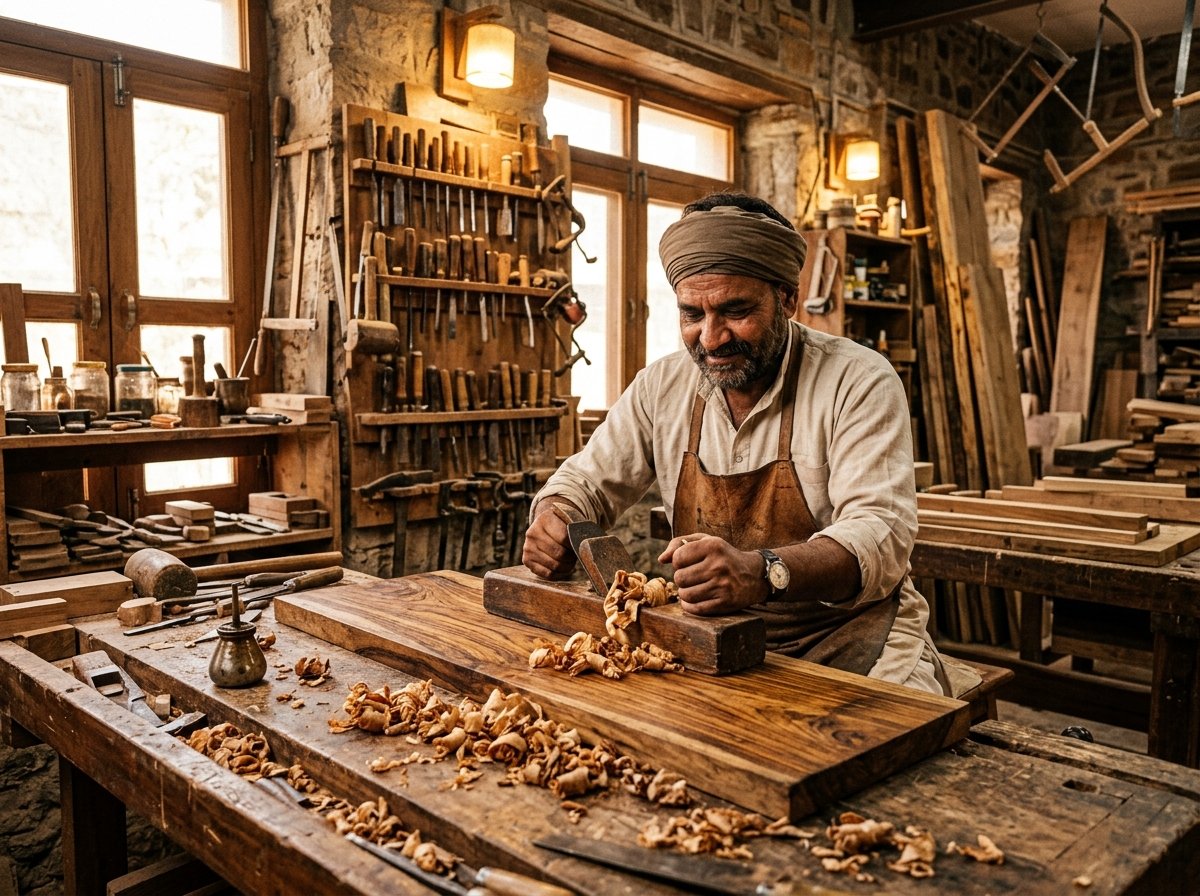
In conventional timber processing, raw logs are mechanically squared off and trimmed into straight, uniform planks, discarding the outer contours of the tree trunk.
Live-edge furniture celebrates the opposite philosophy: it honors the natural outer curvature of the tree, preserving the undulating silhouette formed by decades of wind, weather, and organic growth. Every knot, hollow, and ripple tells the life story of the forest.
Sourcing and Slow Seasoning Centennial Slabs
Creating a stable live-edge tabletop requires master artisan patience:
- Cross-Sectional Harvesting: Slabs are sliced lengthwise from fallen mature tree trunks, often measuring 3 to 4 inches in thickness.
- Slow Dehumidification: Because live-edge slabs contain both dense heartwood and softer outer sapwood, they must be air-seasoned slowly for months before entering vacuum solar kilns to prevent stress fissures.
The Signature Butterfly Key Inlay (Chigiri)
Where natural expansion fissures occur across the face of a slab, master woodworkers insert hand-chiseled butterfly key inlays (known in traditional Japanese joinery as Chigiri):
- A contrasting hardwood (such as dark ebony in golden teak, or rosewood in honey timber) is hand-carved into an hourglass key shape.
- An exact matching cavity is hand-mortised across the fissure.
- The key is tapped in with mallet and organic adhesive, mechanically locking the split together permanently while creating a breathtaking decorative motif.
Styling a Live-Edge Centerpiece in Contemporary Spaces
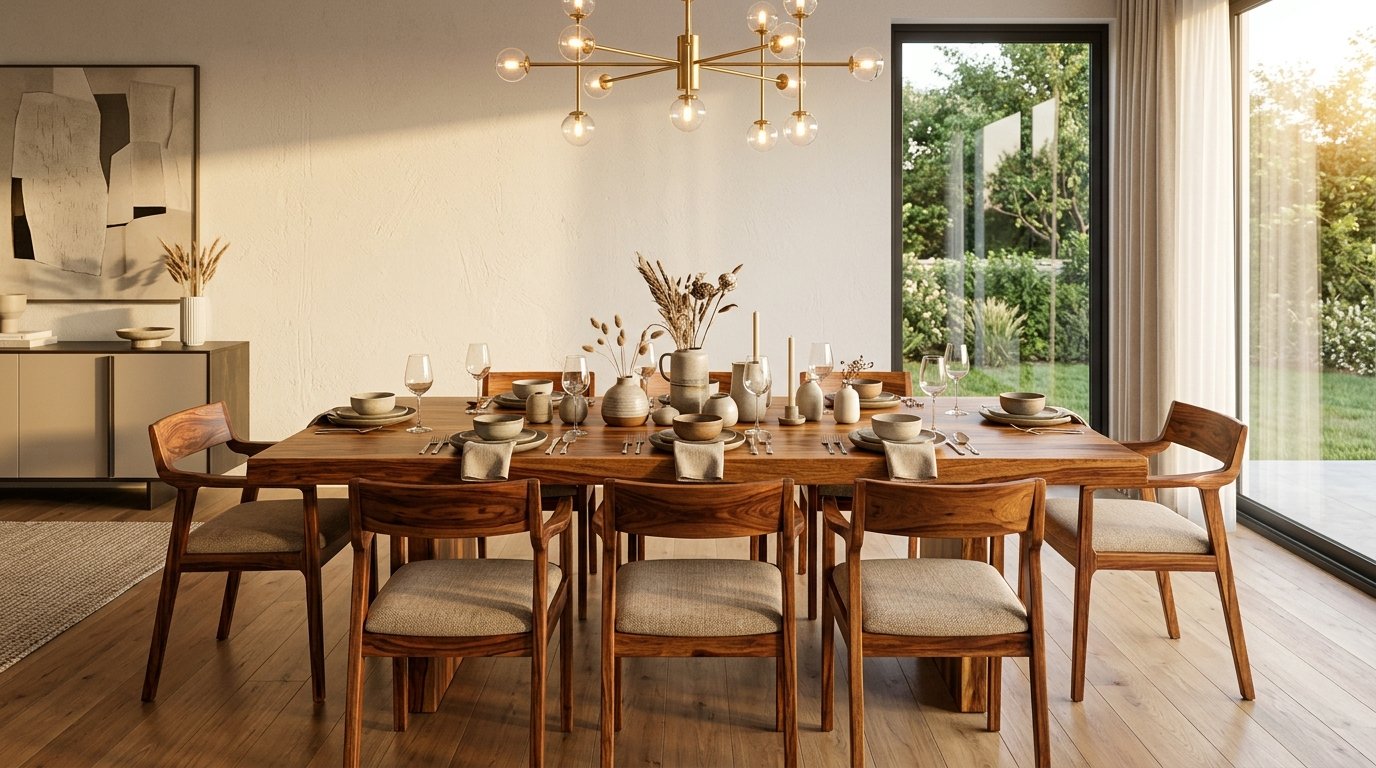
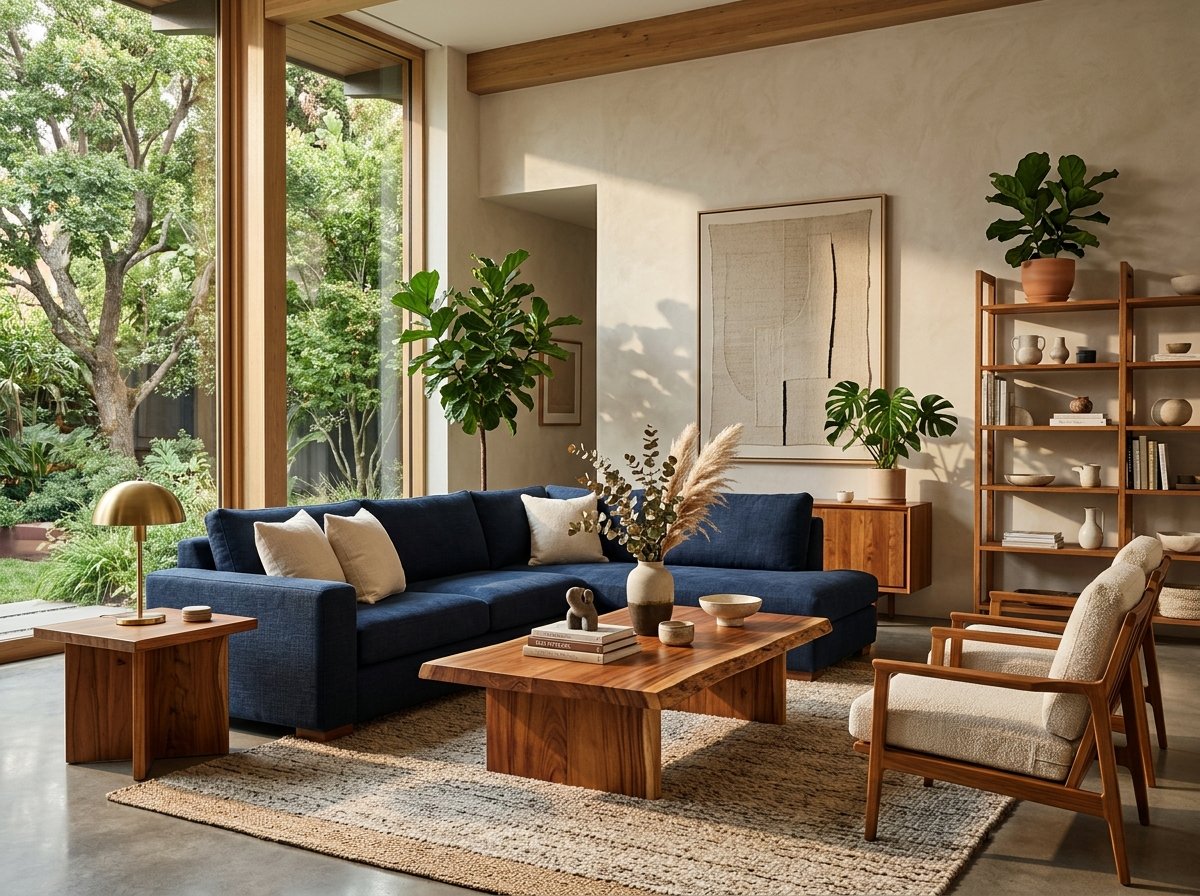
A live-edge dining or coffee table is an organic kinetic sculpture. To let it shine:
- Pair it with sleek, minimalist dining chairs upholstered in neutral oatmeal linen or charcoal leather.
- Contrast the fluid, asymmetrical wooden edge against crisp geometric architectural elements like concrete walls, steel window frames, and smooth marble floors.